
"Madagascar coffee exports"
300 article(s) found

The origin of coffee beans and the basic characteristics of yellow bourbon coffee beans such as lemon
Professional coffee knowledge exchange more coffee bean information please follow the coffee workshop (Wechat official account cafe_style) Front Street-Huangbourne Coffee varieties introduction to the origin of Brazil Huangbourbon as a coffee variety, Huangbourbon has been growing on this land for nearly 90 years. By the 1850s, Brazil had become the world's leading coffee producer. But the coffee at that time

The basic knowledge of Coffee planting
What is coffee? Coffee is the fruit of a Rubiaceae plant growing about 6000 feet above sea level, distributed on the world's narrow subtropical axis; coffee trees grow green all the year round and can grow up to 20 feet tall, and are generally controlled at 8 to 10 feet for easy harvest. It takes three to five years for the coffee tree to bear fruit. First of all, it produces small white flowers that resemble jasmine in shape and size.

General knowledge of boutique coffee introduction to global boutique coffee producing countries
Bolivian coffee variety: Arabian coffee production: 150.000 bags with snow-capped mountain terrain, vast plateau and tropical rain forest, Bolivia has ideal coffee production conditions. More than 90 per cent of the coffee produced in Bolivia is produced in high-temperature and humid climates, with elevations of 500 to 1600 metres above sea level in the tropics of La Paz. Another very important production area

Basic knowledge of Fine Coffee in South America
[Colombia] is the world's second-largest coffee producer, accounting for about 12% of the world's annual output, which is much lower than Brazil's 30% to 35%, but most of them are high-quality mountain-washed beans. Central Colombia is divided into valleys by three north-south longitudinal mountains, of which the central and eastern mountains are the main coffee producing areas. The coffee here is named after the distributed market

A brief introduction to the flavor, taste and aroma characteristics of nutty West Java coffee beans in Indonesia.
Java Coffee-Culture Java coffee beans are famous for their early Java coffee, which refers to Arabica coffee formerly produced on the island of Java. It has a strong aroma, low acidity, taste lubrication, combined with mocha coffee, the Java mocha mixed coffee has been popular and has become synonymous with top coffee. At that time, it was sold to Europe.
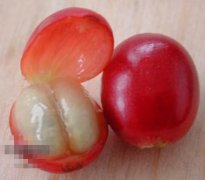
South American coffee history boutique coffee bean species
[Colombia] is the world's second-largest coffee producer, accounting for about 12% of the world's annual output, which is much lower than Brazil's 30% to 35%, but most of them are high-quality mountain-washed beans. Central Colombia is divided into valleys by three north-south longitudinal mountains, of which the central and eastern mountains are the main coffee producing areas. The coffee here is named after the distributed market

A brief introduction to the treatment method of grinding and baking degree of Indonesian West Java boutique coffee beans with low acidity
In the 18th century, Indonesia became a major producer of coffee, and almost all of its high-quality Arabica coffee was supplied to Europe. But by the 19th century, coffee rust, which appeared in Ceylon in 1869, also affected Indonesia. By 1877, most of the coffee fields on the Indonesian islands had been damaged by rust, and the Dutch had to introduce other coffee varieties from Africa, namely Romsda.

Basic knowledge of coffee cultivation basic knowledge of coffee
What is coffee? Coffee is the fruit of a Rubiaceae plant growing about 6000 feet above sea level, distributed on the world's narrow subtropical axis; coffee trees grow green all the year round and can grow up to 20 feet tall, and are generally controlled at 8 to 10 feet for easy harvest. It takes three to five years for the coffee tree to bear fruit. First of all, it produces small white flowers that resemble jasmine in shape and size.

A brief introduction to the description of flavor and aroma characteristics of boutique coffee beans in West Java, Indonesia
Java Coffee-Culture Java coffee beans are famous for their early Java coffee, which refers to Arabica coffee formerly produced on the island of Java. It has a strong aroma, low acidity, taste lubrication, combined with mocha coffee, the Java mocha mixed coffee has been popular and has become synonymous with top coffee. At that time, it was sold to Europe.

The award-winning Queen's Manor of Brazil and the recommendation of baking and cooking
Brazilian Queen Manor and Baking and Cooking recommend FazendaRainha (Queen's Manor), which covers an area of 280mu and is located in Vale da Grama, an ancient volcanic valley in Brazil. In 2011, the manor won the championship in the COE competition in Brazil. There are 200 mu of Huangbo coffee trees planted in the manor, and the undulating mountains make it impossible to carry out large-scale mechanical harvesting, so all here

The Cultural History of Coffee in South America
[Colombia] is the world's second-largest coffee producer, accounting for about 12% of the world's annual output, which is much lower than Brazil's 30% to 35%, but most of them are high-quality mountain-washed beans. Central Colombia is divided into valleys by three north-south longitudinal mountains, of which the central and eastern mountains are the main coffee producing areas. The coffee here is named after the distributed market

Coffee knowledge introduction of all kinds of coffee introduction of Indian coffee
Tanzania coffee green bean / Peaberry raw PB coffee beans from Tanzania, usually the top grade, most of the Tanzania beans are grown in Mr. Kilimanjaro and Mt, near the northern Kenyan border. The Meru area, commonly known as "Clemangaro", is occasionally known as the distribution center Mosh.

The basics of coffee cultivation the types of coffee beans
What is coffee? Coffee is the fruit of a Rubiaceae plant growing about 6000 feet above sea level, distributed on the world's narrow subtropical axis; coffee trees grow green all the year round and can grow up to 20 feet tall, and are generally controlled at 8 to 10 feet for easy harvest. It takes three to five years for the coffee tree to bear fruit. First of all, it produces small white flowers that resemble jasmine in shape and size.

What are the characteristics of Congolese coffee? does the Congolese Veronga Coffee Company recommend Congolese coffee?
Professional coffee knowledge exchange more coffee bean information please follow the coffee workshop (Wechat official account cafe_style) mention Africa, people's first impressions are: desert, drought, tribe, poverty, mystery and so on. Because of its climatic environment, it has become a paradise for the growth of coffee trees. The world's first coffee tree was found in the Horn of Africa. Local indigenous tribes often use coffee

Detailed introduction of micro-batch half-sun yellow bourbon in Santa Lucia Manor, South Minas, Brazil.
For the exchange of professional baristas, please follow the coffee workshop (Wechat official account cafe_style) Product name: Santa Lucia Manor Yellow Bourbon, Brazil: South Minas varieties: yellow bourbon altitude: 1080-1200 m treatment: half sun (peel sun) flavor description: nuts. Cream. Caramel Santalu Seya Manor (Fazenda Santa Lucia) is located in South Minas (S

Basic knowledge of Fine Coffee Coffee History of South America
[Colombia] is the world's second-largest coffee producer, accounting for about 12% of the world's annual output, which is much lower than Brazil's 30% to 35%, but most of them are high-quality mountain-washed beans. Central Colombia is divided into valleys by three north-south longitudinal mountains, of which the central and eastern mountains are the main coffee producing areas. The coffee here is named after the distributed market

A brief introduction to the market price of boutique coffee beans with low acidity in West Java, Indonesia
Java coffee growing environment and main producing area Robusta belongs to lowland cultivation, which is resistant to high temperature, drought, rain, insect pests and strong adaptability. it can grow very well on flat land, and the harvest does not necessarily need manual work, but can be carried out completely by vibration machine. There are two kinds of Robusta coffee that we often come into contact with: A.P.Robusta and W.I.B.Robu.

A brief introduction to the flavor, taste and aroma characteristics of boutique coffee beans in West Java, Indonesia.
Java produces only a small amount of Arabica beans, most of which were imported from Africa after the rust disaster. This kind of coffee has a strong bitter taste after roasting, but the aroma is extremely light. Although it has low acidity and delicate taste, it is rarely used for direct drinking. It is often used to mix mixed coffee, or to make instant coffee. Java coffee is produced in Java, Indonesia, and belongs to Elaraby.

A brief introduction to the Origin, Development, History and Culture of Fine Coffee beans in West Java, Indonesia
Java produces only a small amount of Arabica beans, most of which were imported from Africa after the rust disaster. This kind of coffee has a strong bitter taste after roasting, but the aroma is extremely light. Although it has low acidity and delicate taste, it is rarely used for direct drinking. It is often used to mix mixed coffee, or to make instant coffee. Java coffee is produced in Java, Indonesia, and belongs to Elaraby.